News
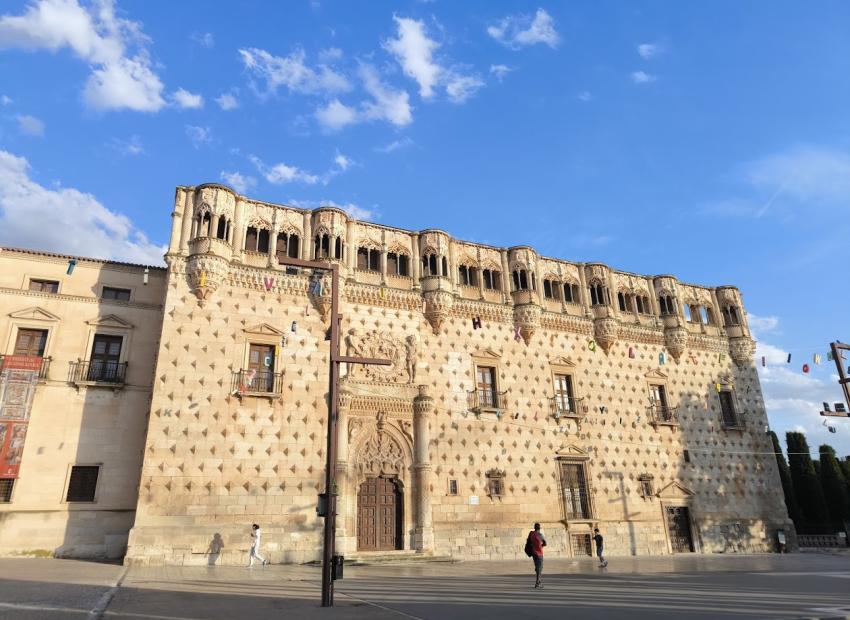
European storytelling routes lead to Guadalajara
Read more

“A Net to Catch European Stories and Tales from the Oral Tradition” (ANCESTOR) is an international Creative Europe Programme (CREA) project co-funded by the European Union. ANCESTOR aims to promote the oral heritage of the EU, using the European Network of Storytelling Towns and Cities (ENSST) as its main tool. ANCESTOR aims to strengthen the ENSST network, addressing the following areas for improvement:
ANCESTOR plans to raise awareness of the network, encouraging European Storytelling Sites to come together and establish connections. This will open up avenues for a new type of cultural tourism, demonstrating that storytelling is a source of cultural wealth.
Five European institutions have partnered on the project, bringing together diverse expertise in oral heritage, education, and community engagement: the main coordinator, Spain’s Seminario de Literatura Infantil y Juvenil de Guadalajara (SLIJ), that has been organizing the Fairy Tale Marathon since 1992; CEMEA del Mezzogiorno (Italy); Comenius University in Bratislava (CUB) (Slovakia); Institute of Literature, Folklore and Art at the University of Latvia (ILFA); Institute of Ethnology and Folklore Studies–Bulgarian Academy of Sciences (IEFSEM). Additional collaborating partners include La Lettura Nonostante, A Spell in Time, the Latvian Storytellers Association, and the Spanish NGO ACCEM, all of which contribute specialised knowledge in storytelling and reading promotion, oral heritage, and support for immigrant communities.
The ILFA team is engaged in all project activities, including training young storytellers in Latvia, supporting the artist residency, and contributing to the meeting of Storytelling Sites in Guadalajara, Spain (June, 2026). Its special responsibilities lie within WP4, where, together with colleagues from Slovakia, it will help organize the 3-day meeting of European institutions and organizations working on oral heritage from different perspectives in Bratislava, focusing on coordinating expert exchanges and contributing to the development of shared methodological insights (March, 2027).
Project No.: 101255605
Implementation period: 2026–2027
Projekta group at ILFA: Rita Zara (coordinator), Guntis Pakalns, Māra Mellēna
Photo by Guntis Pakalns

The project is co-financed by the Ministry of Culture of the Republic of Latvia.