
UNART: Unlocking the Underworld for 18 months
Devils, spirits of the dead, forest mothers, and riding hags haunting our nightmares are not relics of the past. They are showing up more and more in contemporary Latvian and Baltic art, and the "Contemporary Art and Folklore: Unlocking the Underworld (UNART) "project is investigating why. At the project's midpoint, researchers have confirmed a striking trend: references to death, the underworld, its beings, and other "chthonic" folklore themes in Baltic art have grown sharply over the last five years – far more than in previous decades.
Folklore and mythology have always shaped how societies process fear, loss, and change. UNART asks what it means that today's artists are reaching for underworld imagery – devils, witches, forest spirits, swamps – more than ever before. The project's working idea is that this imagery reflects present-day anxieties, from the pandemic to the war in Ukraine, refracted through inherited cultural symbols.
The research team spent its first 18 months gathering evidence: combing academic and popular publications, gallery archives, exhibition catalogues, artists' online profiles, and even testing (and ultimately abandoning) AI-assisted search after it produced unreliable results. This work produced a dataset of more than 300 images, refined into 159 catalogued entries by 106 Latvian, Estonian, and Lithuanian artists, all available here in the project's gallery on the ILFA website. Building on this, the team conducted in-depth interviews with ten selected artists while walking with them through relevant landscapes.
During the first 18 months, the project concentrated on data gathering and mapping the field. The research team also began interpreting the collected material, developing research hypotheses and situating the findings within Baltic and European art history. This process revealed that contemporary artists engage with folklore in diverse ways. Some works refer directly to traditional figures, stories and symbols, while others explore the underworld through its landscapes, functions, moods and associations with nature.
The data confirms the initial hunch: only a handful of works referenced this imagery in the 1990s and 2000s, compared with a sharp rise over the past five years. Analysis of the dataset revealed four recurring themes: death and the afterlife; devils and other malevolent beings; witchcraft and ritual, often reclaimed as symbols of empowerment; and nature, especially forests, swamps, and water, linked to ecological concern. Findings have been presented at four major international conferences, and an international symposium held in Tallinn in May 2026 at the Estonian Academy of Arts drew researchers, artists, and curators from across Europe and beyond. Presentations and workshops addressed mythology in contemporary art, feminist and ecological interpretations of folklore, Indigenous knowledge, archival practices, performance and new approaches to curating. Film screenings further expanded the discussion by considering environmental change, indigeneity, decoloniality and cultural heritage. The symposium strengthened international networks and created opportunities for interdisciplinary exchange.
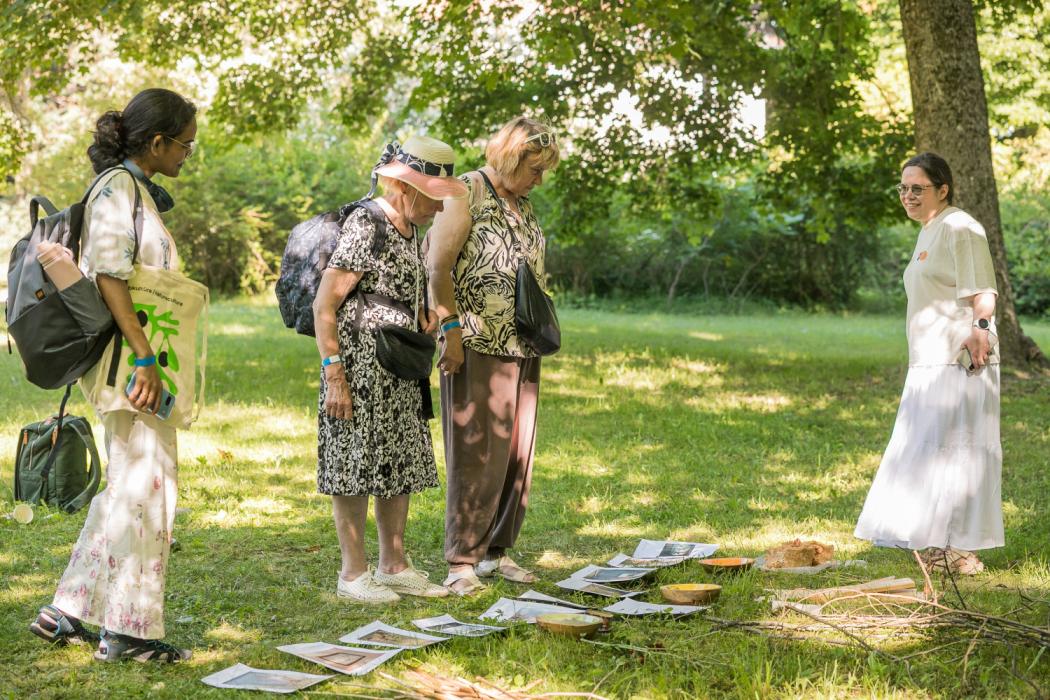
Seven artist interviews were published on the arts platform arterritory.com, and the project's public image gallery and outreach – including a well-attended public event at the University of Latvia Botanical Garden – have helped raise broader awareness of the topic. Along the way, the team also encountered real challenges: defining the subject proved harder than expected, an attempt to crowdsource data through public surveys drew limited response, and building the project's public database took longer than planned after early technical approaches fell short. The team developed a more robust, purpose-built solution instead.
The project has also contributed to the development of its research team. Regular meetings, theoretical discussions and shared responsibility for work packages have supported collaboration and professional growth. Student researchers have gained practical experience in archival research, event organisation, communication and academic networking, while senior researchers have expanded their interdisciplinary skills through cooperation across different fields.
With the new datasets in hand, the second half of the project turns to interpretation and dissemination. The summer school Re-Enchanted Worlds: Contemporary Practices and Traditional Knowledge, organised with the Latvian Centre for Contemporary Art, already took place in Madona, Latvia, from 6–11 August and brought together twenty-five emerging artists, curators, and early-career researchers. Together they explored how folklore and traditional knowledge can inspire new artistic practices and offer meaningful perspectives on the challenges of the present. Now the team is preparing research articles and a monograph.
Photo: Toms Grīnbergs, University of Latvia.