
Researchers introduce folklore, literature and the arts at European Researchers' Night
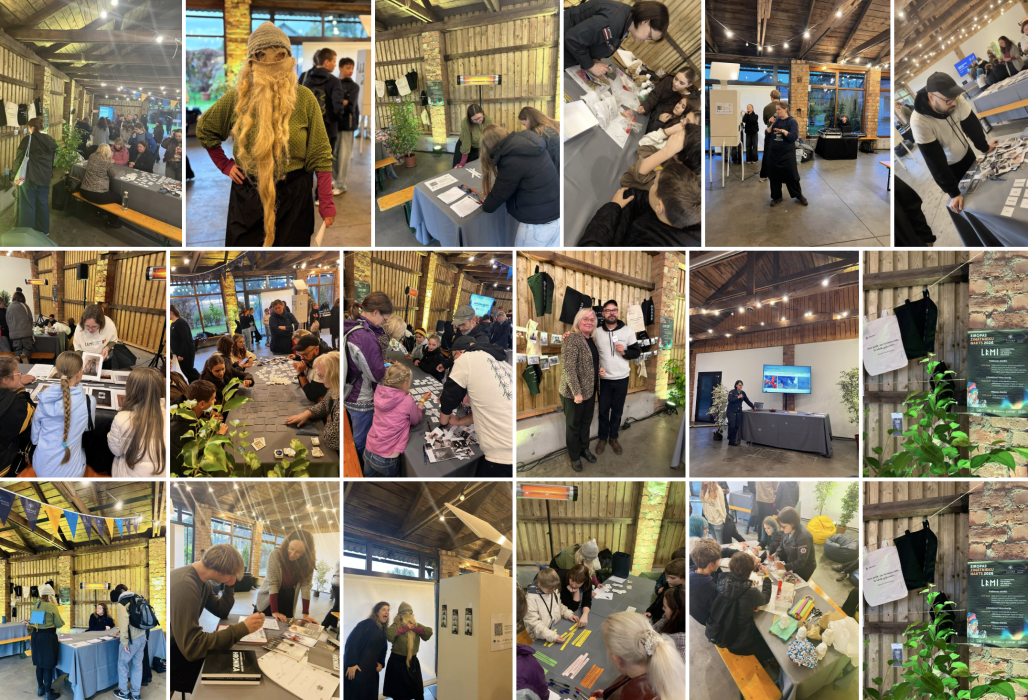
On the evening of 25 September 2026, researchers from the Institute of Literature, Folklore and Art of the University of Latvia (ILFA) took part in European Researchers’ Night, inviting visitors to the University of Latvia Botanical Garden to explore folklore, literature, the arts, and traditional knowledge in engaging and informative ways.
Throughout the evening, the activities prepared by ILFA brought together research, play, creativity, and conversation. At the Folklore Corner, visitors explored folk song texts featuring fleas, lice, and other parasites through interactive games. The educational games “Why Does the Flea Jump So High?” were developed in collaboration with the UL iGEM Latvia-Riga student team, offering an opportunity to look at the world of parasites from the perspectives of both biologists and folklore researchers.
At the Literature Corner, visitors could test their memory, explore “Then and Now” photographs of writers, play reading-habits bingo, discover the map “Where Does Literature Live?”, and get creative by making literary memes.
Research into the arts was also transformed into engaging tasks and games. At the Arts Station, visitors could test their knowledge of the world of theatre and explore contemporary art and its materiality, taking on the role of attentive observers of art.
Meanwhile, the “Traditional Knowledge in Crisis Situations” corner focused on people’s experiences and the knowledge that has helped them navigate different crises. Activities included a quick survey and short interviews about experiences during crises, activities for children, and a popular-science talk exploring the connections between culture, heritage, and security.
About MSCA and the UL project “Aurora Nexus: Connecting People, Science and Art”
The University of Latvia project “Aurora Nexus: Connecting People, Science and Art” is implemented with the support of the European Commission programme “MSCA and Citizens: European Researchers’ Night and Researchers at Schools 2026–2027”.
The project aims to strengthen science communication, foster public interest in and engagement with research – particularly among children and young people – and promote interaction between science and the arts. European Researchers’ Night is one of the central activities of the University of Latvia project.
The Marie Skłodowska-Curie Actions (MSCA) are a European Union initiative supporting research, innovation, researchers’ professional development, and science communication.
