
Launches a project on anti-genderism discourse in Latvia’s public sphere and literature
Institute of Literature, Folklore and Art of the University of Latvia has launched a project funded by the Latvian Councile of Science titled “ANTI-MOB: Anti-Genderism Discourse in Latvia’s Public Sphere and Literature” (LZP-2025/1-0573).
The aim of the project is to empirically examine how internationally circulating anti-gender ideas and patterns of argumentation have manifested in Latvia’s public sphere and literature over the past decade, and how these developments are connected to political, social, and economic transformations.
Within the project, the concept of “anti-genderism” refers to a set of discourses that mobilize public attention and concern around changes in gender roles, family policy, reproductive rights, and LGBTQ+ issues, often linking them to broader experiences of social insecurity and value conflict. The study will pay particular attention to mechanisms of mobilization — how categories of “threat” and “normality” are constructed, how images of the enemy are formed, which arguments recur across different communication channels, and how these narratives are used in political and social competition.
By combining approaches from the social sciences and literary studies, the project will analyze anti-gender positions and related discourses in:
-
the public sphere (mass media, public statements, political communication, etc.);
-
literary texts in which these issues are thematized, interpreted, or problematized.
The research will employ discourse analysis and case study methods to map key argumentation patterns, the roles of different actors, and the contexts in which these discourses circulate. Special attention will be devoted to mass media content in the period before and after the 15th Saeima elections, as well as to the ways in which these discourses shape the public agenda and policy-making frameworks. The project will also specifically examine how social groups targeted by these discourses are constructed and what social consequences such representations may entail.
The project’s societal contribution lies in providing evidence-based, structured research that can strengthen media literacy and improve the quality of public debate by offering a clearer understanding of the origins, modes of dissemination, and functions of anti-genderism discourse. The results will be valuable for researchers, media professionals, and policymakers, offering an analytical overview of discourse dynamics and their relationship to political processes in Latvia.
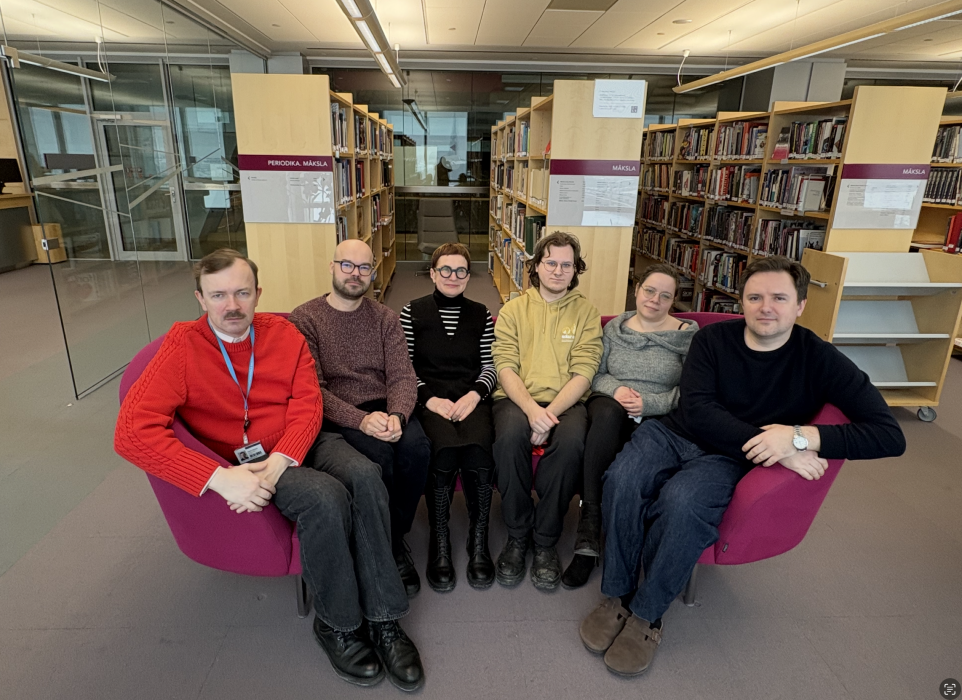
The project brings together an interdisciplinary team of researchers and students, ensuring a multi-layered perspective — from public communication to the analysis of literary representations.