
Folklore researchers go on an expedition to the Nautrēni cultural space.
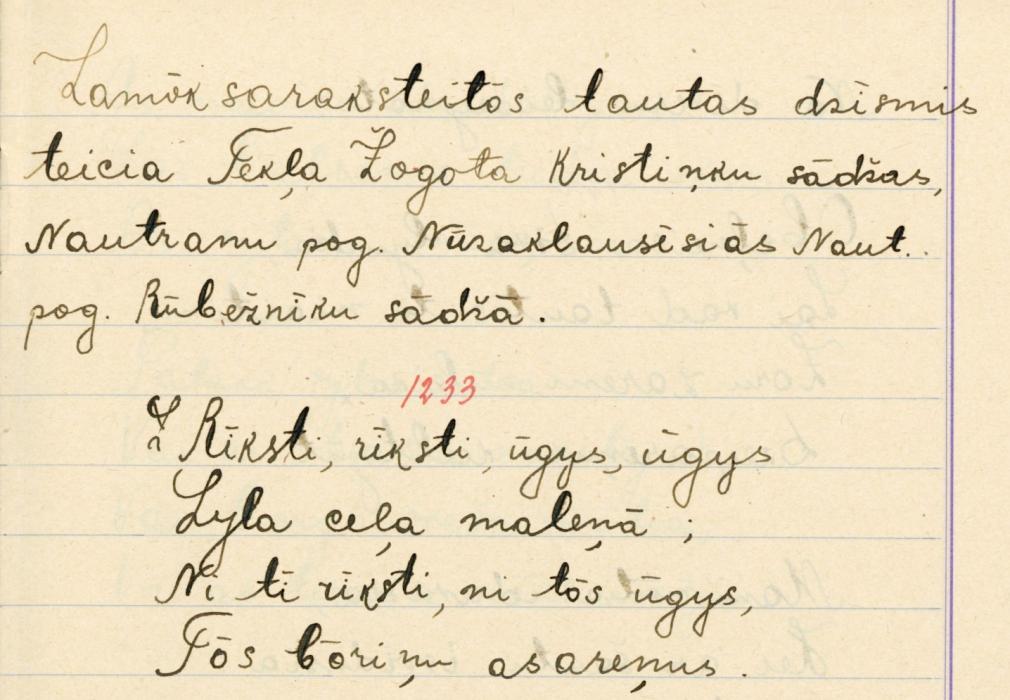
From 6 to 10 July, researchers from the Archives of Latvian Folklore (ALF) at the Institute of Literature, Folklore and Art, University of Latvia, together with colleagues from the Latvian Academy of Culture, Riga Technical University Rezekne Academy, Rīga Stradiņš University, and the Latgalian cultural movement "Volūda", will undertake the 57th Scientific Expedition of the Archives of Latvian Folklore to the Nautrēni Cultural Space.
The annual expeditions of the Archives of Latvian Folklore aim to meet people from different regions of Latvia and document the intangible cultural heritage of local communities – stories of people and places, songs, traditional knowledge and skills, local dialects, and other forms of folklore. By recording this heritage, the expeditions help preserve it for future generations while also encouraging its contemporary study.
Following the 56th Scientific Expedition in Sabile in 2019, the tradition was interrupted due to the COVID-19 pandemic and other circumstances. After a six-year hiatus, the expedition tradition will resume this summer with fieldwork in the Nautrēni Cultural Space – covering Nautrēni Parish, the northern part of Ilzeskalns Parish (both in Rēzekne Municipality), and the northern part of Mežvidi Parish in Ludza Municipality. The cultural space was inscribed on the National List of Intangible Cultural Heritage of Latvia in the autumn of 2025.
This region is closely associated with numerous prominent figures in the cultural and folkloristic history of Latgale and Latvia. During the 1920s and 1930s, the Archives of Latvian Folklore received valuable folklore collections from the area, containing several thousand folk songs, fairy tales, legends, riddles, beliefs, and other folklore materials recorded from dozens of local tradition bearers. Folklorists have also visited Nautrēni Parish during previous scientific expeditions, including the 12th Scientific Expedition in 1958, which covered the former districts of Ludza, Abrene, and Kārsava, and the 33rd Scientific Expedition in 1986, which included fieldwork in various parts of Latvia, including Nautrēni.
"The inclusion of the Nautrēni Cultural Space in the National List of Intangible Cultural Heritage has inspired folklore researchers to return to the area – this time with a much broader research programme. The objectives of this summer's expedition are to document the present-day state of the cultural space's intangible cultural heritage; to expand our knowledge of the collectors and tradition bearers represented in the historical folklore collections, including visits to their former homes, workplaces, and burial sites; to enrich the digital archive garamantas.lv with newly collected materials; and to investigate the newly established cultural space community and its preparedness for various crisis situations," says Sandis Laime, Lead Researcher at the Institute of Literature, Folklore and Art, University of Latvia, and head of the expedition.
The results of the expedition will be presented at a closing event on 10 July at 5:00 p.m. at the Nautrēni Cultural Centre, where participants and local residents will have an opportunity to reflect on the work accomplished during the expedition.
The expedition is supported by the National Research Programme "LETONIKA for the Development of a Latvian and European Society" through the project "NAMS: Latvian Identity and Knowledge Strategies as Resources for Societal Resilience" (VPP-IZM-Letonika-2025/1-0008), the budget subprogramme "Krišjānis Barons' Cabinet of Folksongs" of the Ministry of Education and Science of the Republic of Latvia, the European Commission science communication project "Aurora Nexus: Connecting People, Science and Arts" implemented by the University of Latvia, and the State Culture Capital Foundation of Latvia.
Image caption: Manuscript from the Nautrēni folklore collection.