
First nine months of the “NAMS” project
At the end of 2025 the Institute of Literature, Folklore and Art of the University of Latvia in collaboration with the Faculty of Humanities of the University of Latvia and the Latvian Academy of Culture, launched the project NAMS: Latvian Identity and Knowledge Strategies as a Resource for Societal Resilience. The project is being carried out under the National Research Programme LETONIKA to generate contemporary, interdisciplinary research-based knowledge about Latvian identity.
The project brings together researchers from a range of humanities and social science disciplines, including folklore and heritage studies, cultural history, philosophy, social anthropology, cultural sociology, musicology, environmental humanities and digital humanities. Close interdisciplinary collaboration and discussion among researchers are among the project’s key strengths.
During the first nine months, four research teams have begun investigations into identity, heritage security, the societal significance of folklore studies and contemporary spirituality. The project involves 18 researchers and 7 students (see the “Project Participants” tab on this website) and covers a diverse range of topics: Latvia’s environment and cultural space in literary fiction; the role of Baltic Germans in shaping Latvia’s cultural identity; understandings of Latvian identity within the Dievturi community; the perspectives of foreign nationals living in Latvia on Latvian identity; public perceptions of Latvia’s future; the symbolism of the national flag’s colours, the Namejs ring and traditional ornaments in social and political spaces; popular piety in Latgale; contemporary healing practices; the history of folklore-collecting campaigns; the creation and impact of Pēteris Šmits’s publication of folk narratives; reflexive ethnography among Latvian folklorists in the 1950s; the history of the folklore movement in the 1970s and 1980s; folklore heritage in contemporary protest culture; the resilience of heritage communities amid geopolitical shifts; and the meanings associated with the concept of “cultural space”.
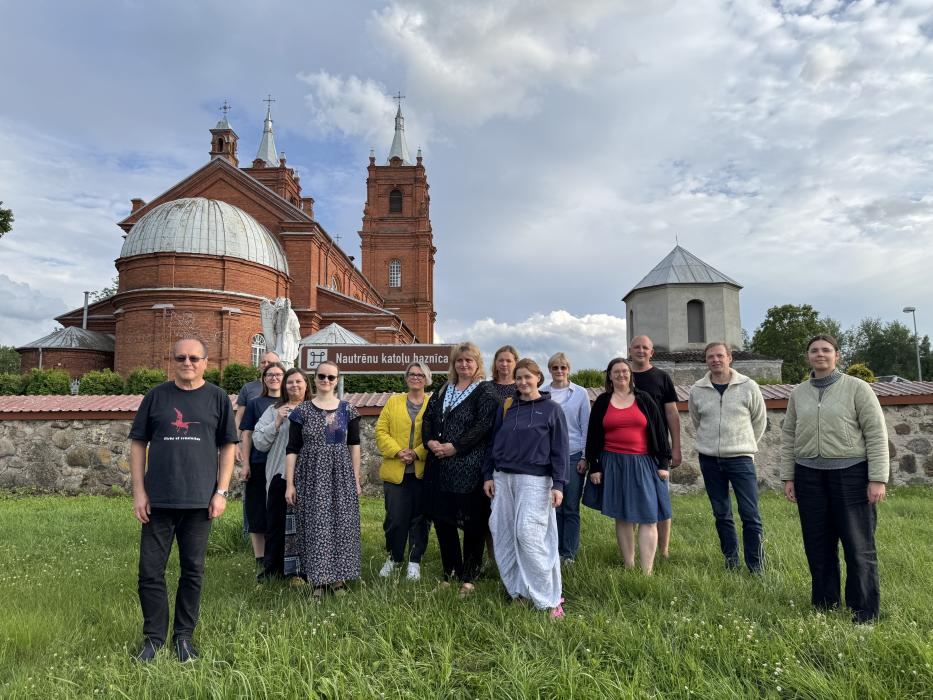
The main activities during the first nine months included collecting research data and studying sources, participating in nine conferences, conducting a collaborative field study in the Nautrēni cultural space in July (read the report here), and cooperating with the Latvian National Centre for Culture on heritage security. Anthropologist Anna Griķe’s monograph on popular piety in Roman Catholic parishes along the Latvian–Belarusian border is already at the editing stage.
Public engagement and community involvement are important aspects of this research programme. Research findings are already being shared with students at the Faculty of Humanities of the University of Latvia and the Latvian Academy of Culture. At least 37 members of the public have participated in the research as interviewees. We have presented our research on several occasions in broadcasts on Latvian Radio 1 (LR1), on LSM.lv and in Latgale’s regional media, particularly in the Rēzekne Municipality. We also took part in the discussion “Cultural Heritage – an Asset or a Burden?” at the LAMPA Conversation Festival in Cēsis.
We invite you to follow the project’s future activities on the websites and social media accounts of the participating institutions!
The full title of the National Research Programme is “LETONIKA for the Development of a Latvian and European Society”.
Photo: Project participants in Rogovka, July 2026. Photographer: Edeite Laime.