
Collection of essays entitled “Wandering the Streets: The City as Seen by Latvian Modernists” is being published
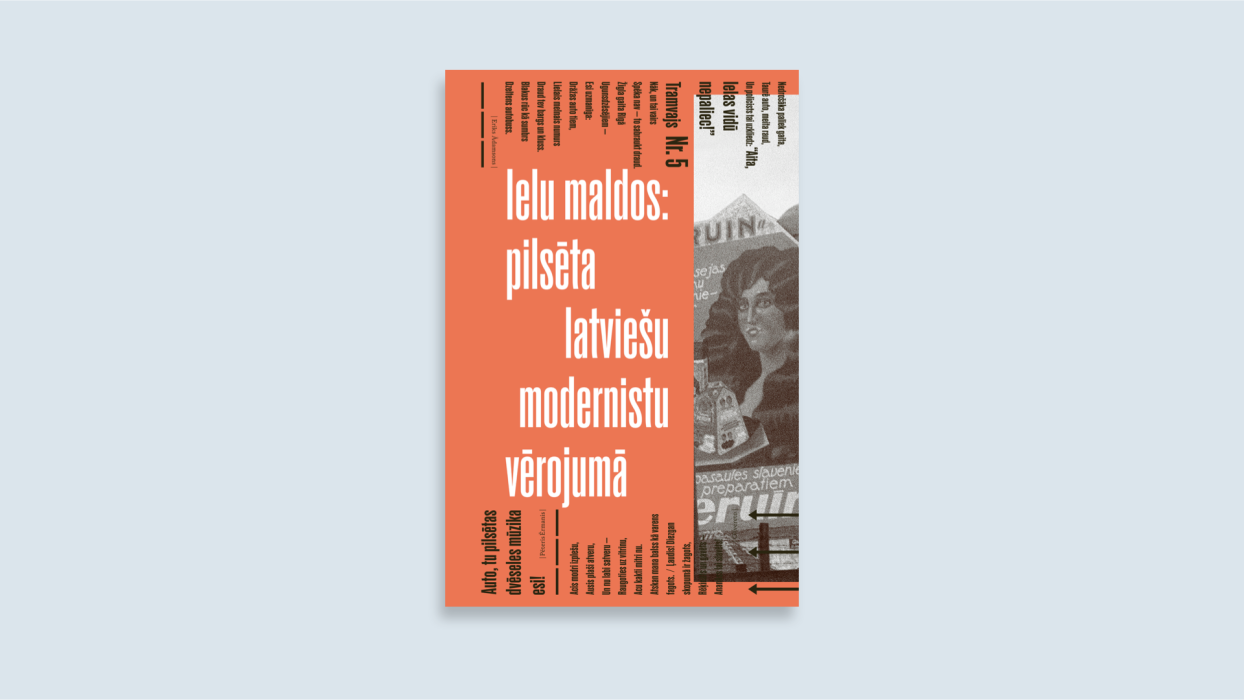
The Institute of Literature, Folklore and Art at the University of Latvia has published an interdisciplinary collection of essays entitled "Wandering the Streets: The City as Seen by Latvian Modernists", which explores the urban experience in Latvian interwar literature and art. The book invites readers to take a stroll through the streets of Riga, Paris, Berlin and other European cities in the company of poets, artists, flâneurs, flâneuses, dandies, clerks and labourers. The collection continues the theme of the exhibition "Wandering the Streets", which took place this year at the Latvian National Museum of Art.
At the beginning of the 20th century, and particularly during the interwar period, the city became one of the most significant spaces for modern life and artistic creativity. Opportunities for travel, habits of work and leisure, and people’s relationships with public spaces and with one another all changed. The city’s streets, cafés, shop windows, industrial estates and modes of transport found their way into literature and the visual arts, revealing both the allure of modernity and the anxiety and alienation it engendered.
As the editors of this collection of essays – Eva Eglāja-Kristsone, Artis Ostups and Kārlis Vērdiņš – emphasise in the introduction: “What we understand today as Latvian modern culture has, to a large extent, taken shape on the streets.” The impressions gained by writers and artists during their walks, the fast-paced rhythm of the city, the experience of the crowds and new technologies also inspired a search for new means of artistic expression.
The first part of the collection comprises articles by six researchers – Aija Brasliņa, Sanita Duka, Ieva Kalnača, Eva Eglāja-Kristsone, Artis Ostups and Kārlis Vērdiņš – grouped into five thematic sections: "The Mobility of Latvian Modernists", "Women", "Workers’ Culture", "Technological Progress" and "Streets, Shop Windows, Cafés". They explore the travels and experiences of Latvian modernists in European metropolises, the place of women in the modern city, depictions of working-class life, the changes brought about by technological progress, as well as the allure and contradictions of urban public spaces.
The book features both well-known representatives of Latvian modernism, such as Aleksandrs Čaks, Jāzeps Grosvalds, Niklāvs Strunke and Linards Laicens, and authors whose urban experiences have been less extensively studied to date, including Lūcija Zamaiča, Austra Skujiņa and Tija Banga. Perspectives from literary and art history are interwoven with approaches from urban studies, gender studies and the study of modernity, allowing us to view Latvian interwar culture within a broader European context.
The second part of the collection documents the exhibition "Wandering the Streets: The City as Seen by Latvian Modernists", which was on display at the Latvian National Museum of Art from 31 January to 2 August 2026. The exhibition was organised in collaboration between the Institute of Literature, Folklore and Art at the University of Latvia and the Latvian National Museum of Art. The book not only explores the themes covered in the exhibition in greater depth, but also documents this cultural event, preserving the opportunity to engage with the exhibition’s content after it has closed.
This collection of articles was produced as part of the Latvian Council of Science’s fundamental and applied research project "Walking Through Time: Flânerie and Modernity in Latvian Interwar Culture" (lzp-2022/1-0505) and published with the support of the State Culture Capital Foundation.
Compilers of the collection: Eva Eglāja-Kristsone, Artis Ostups, Kārlis Vērdiņš
Pictures editor: Aija Brasliņa
Literary editors and proofreaders: Agnese Ērgle, Rūta Jēkabsone, Sanda Rapa
Design, layout and image processing: Mārtiņš Ratniks
Printing: Jelgava Printing House
The book can be purchased at the University of Latvia’s Institute of Literature, Folklore and Art (3 Mūkusalas Street, Riga), by emailing apgads@lulfmi.lv, or from bookshops across Latvia.