
12 November – discussion “Does Latvia have soft power?”
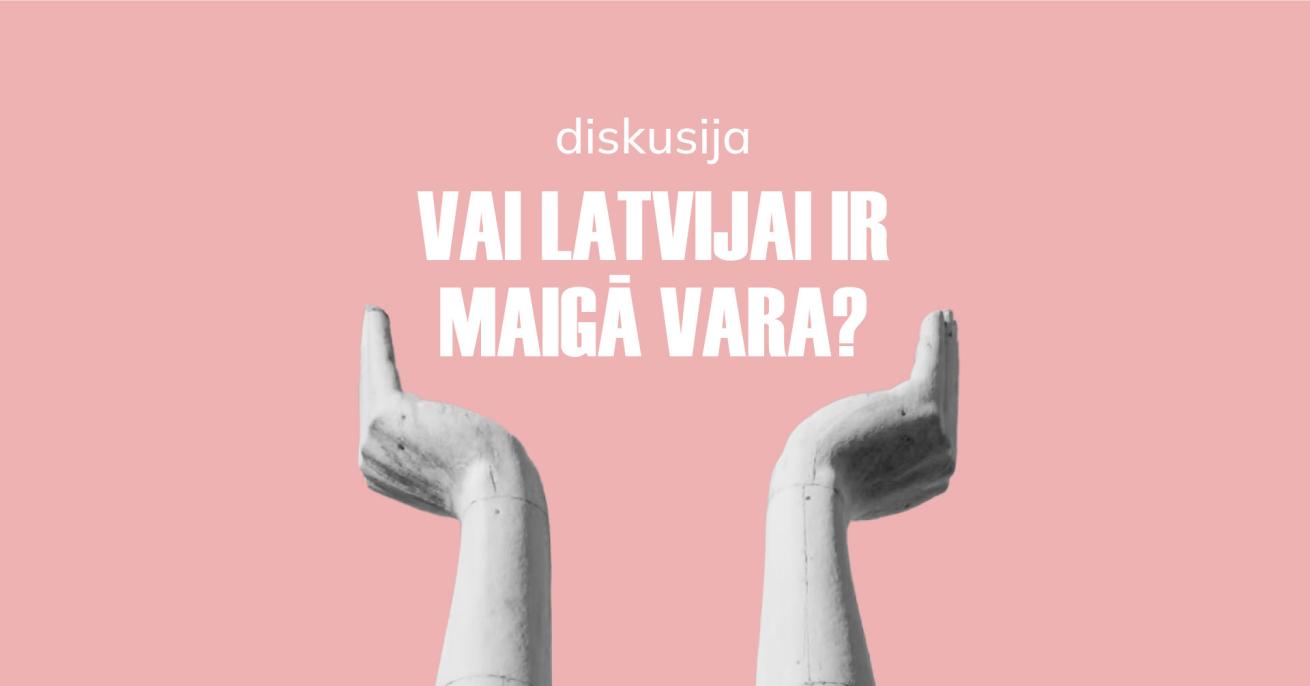
We invite you to the discussion “Does Latvia Have Soft Power?”, which will take place on 12 November at 16:00 at Kino Bize (37 Elizabetes Street, Riga).
The discussion will feature Andis Kudors – researcher of soft power and political scientist; Igors Gubenko – philosopher and publicist; Staņislavs Tokalovs – film director; and Anda Laķe – researcher of cultural processes and society.
The discussion will be moderated by social anthropologist Klāvs Sedlenieks.
The concept of soft power was introduced by American political scientist Joseph Nye in 1990 to describe the influence of the United States and other major powers in the world. Nye argued that, alongside conventional “hard power”, there is also “soft power”. While the former operates through coercion and threats, the latter works through attraction.
In this discussion, held in the spirit of Latvia’s patriotic week, we will ask whether Latvia possesses such soft power and, if so, how it manifests itself. Does Latvia have the appeal and values that attract people?
Nye’s theory and the concept of soft power have traditionally been used to discuss the influence of countries beyond their borders. However, in this conversation, we particularly want to explore which values within Latvian society are, or could potentially become, meaningful and valuable to Latvia’s own residents.
At times, judging by the policy approaches adopted, it may seem that coercion is almost the only way power is exercised in Latvia. Through this discussion, we hope to identify the foundations for soft power within Latvian society as well.
The discussion is expected to last 90 minutes. It will be followed at 18:00 by a screening of Pēteris Krilovs’ latest documentary film "Sarkanais šķūnis" (The Red Barn).
Admission to the discussion is free of charge. A ticket is required for the film screening.
The event is organised as part of the project “NAMS. Latvian Identity and Knowledge Strategies as Resources for Societal Resilience” (No. VPP-IZM-LETONIKA-2025/1-0008), funded under the National Research Programme “Letonika for the Development of a Latvian and European Society”.
