
The collective monograph “Dziesmu svētkiem – 150. Vēsture. Versijas” has been published
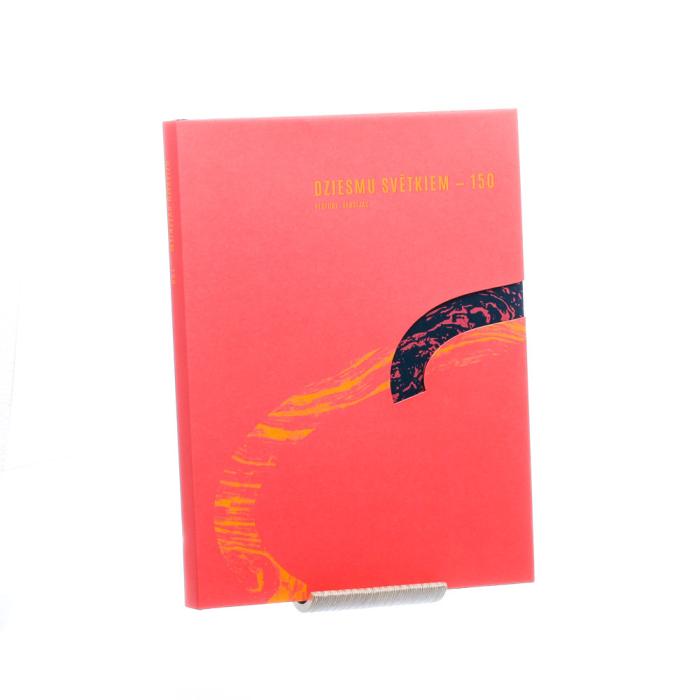
The collective monograph “Dziesmu svētkiem – 150. Vēsture. Versijas” (150 Years of the Song Festival: History. Versions), edited by Ilze Šarkovska-Liepiņa, has been published by the Institute of Literature, Folklore and Art of the University of Latvia (LU LFMI). The volume marks a further step in research on the Song Festival tradition, placing the SONG — that is, repertoire and the musical dimension of the festival — at the centre of attention, while examining musical developments and turning points within broader cultural and intellectual contexts.
The structural backbone of the book follows the generally accepted periodisation of the Latvian Song Festival tradition (prehistory; 1873–1918; 1918–1940; 1945–1990; from 1990 to the present). Along this timeline, the authors explore the diverse sources that shaped the emergence and development of the festival tradition (Ilze Šarkovska-Liepiņa), and outline its ethnic axis, embodied in the folk song as the foundation of the festival repertoire (Arnolds Klotiņš). The volume traces trends in choral conducting and the development of vocal sound methodology up to the phenomenon of the so-called “Nordic sound” (Jānis Erenštreits), and analyses the relationship between music and power, investigating how different political regimes influenced repertoire choices, stylistics, and genre (Ieva Ezeriete, Ilze Dūmiņa-Kroja).
The book also looks beyond Latvia to explore Song Festivals in exile (Orests Silabriedis), and delves into symphonic, vocal-symphonic, and wind orchestra traditions (Armands Znotiņš and Ilze Šarkovska-Liepiņa). The contributors — musicologists, professional performers, and music journalists — bring distinct professional perspectives and literary styles to the volume. Each chapter presents its own “version,” its own framing of history. The book is intended for cultural professionals, members of the choral movement, and anyone interested in understanding the winding paths of the Song Festival’s musical history.
The artistic design was created by “Aģentūra Raugs.” Its visual concept is based on notions such as experience, tradition, circulation, strength, and inspiration — as deep as the sea, as ancient as the rings of an oak tree, and as personal as fingerprints. The design draws inspiration from the unique patterns of these lines, reflecting the idea that each chapter represents only one author’s perspective, one framing of history. The visual codes reference the evolving visual language of the Song Festival tradition, while the format itself was chosen to convey a sense of solidity and depth.
The book was commissioned at the initiative of the Latvijas Nacionālais kultūras centrs. It is published by the LU Literatūras, folkloras un mākslas institūts in cooperation with the National Cultural Centre of Latvia and the Museum of Literature and Music. The publication was financially supported by the Valsts kultūrkapitāla fonds and the company Arctic Paper.