
The book “Folklore and Ethnology in the Soviet Western Borderlands” has been published
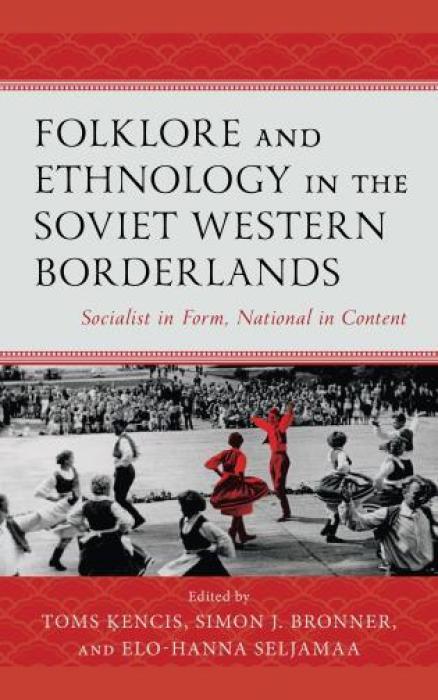
The book “Folklore and Ethnology in the Soviet Western Borderlands” has been published by Lexington Books, edited by Toms Ķencis, Senior Researcher at the Institute of Literature, Folklore and Art of the University of Latvia (UL ILFA), together with Simon J. Bronner and Elo-Hanna Seljamaa.
Thirteen scholars examine the impact of the Soviet period on the research, application, and performance of folklore. Representing generations that lived during and after the Soviet occupation, they reflect on the consequences of state-supported promotion of folk art in the Baltic states, Ukraine, Poland, Slovakia, Belarus, Romania, and Hungary. In their analyses, the authors draw on original archival materials as well as ethnographic data to understand the effects of colonialism on folklore movements and the mechanisms of resistance to the Soviet dictatorship.
Researchers from UL ILFA contributed to several chapters of the volume: Toms Ķencis authored the introduction, “Introduction: The Analytics of ‘Socialist in Form, National in Content’ in the Soviet Western Borderlands,” as well as the chapter “Folklore and Nationalism in the Soviet Western Borderlands”; Digne Ūdre wrote “Ideological Tuning of Latvian Folk Ornament”; Gatis Ozoliņš contributed “The Dievturi Movement under the Soviet Regime”; and Elīna Gailīte authored “The Influence of Soviet Authority on the Formation of Latvian Staged Folk Dance.”