
Symposium "Contemporary Art and Folklore: Unlocking the Underworld"
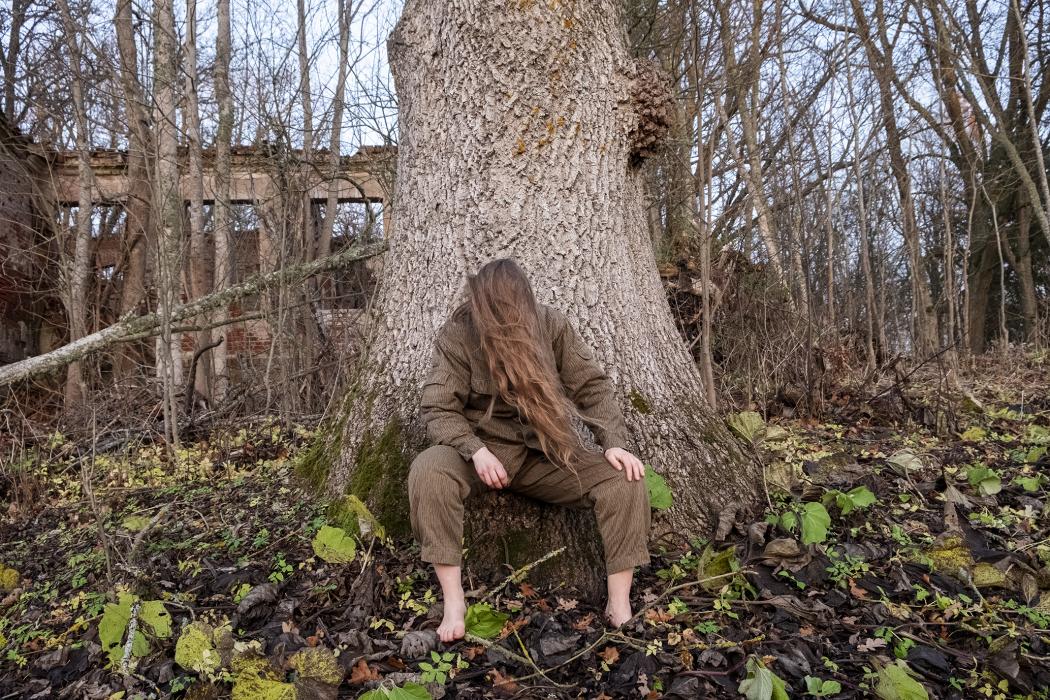
Symposium Contemporary Art and Folklore: Unlocking the Underworld
May 7-8, 2026
Venue: Estonian Academy of Arts, room A501
The symposium aims to explore how references to the mythological underworld engender, maintain, and revitalize the politics of cultural and social critique in contemporary art of the past three decades (post 1991). The focus of the project is the representation and interpretation of chthonic elements, such as devils, spirits, witches and other beings – human or non-human –, associated with the underworld, the subterranean, the primal grounds of being in Baltic folklore and other cultural landscapes.
The participants of the symposium will be exploring how the employment of these elements in contemporary art has contributed to the development of a new body of socio-political knowledge, including sensitivity, awareness, and insight into a range of urgent issues such as gender inequality, racism, the climate crisis, consumerism, and gentrification. The “underworld contemporary art” engages uncanny imagery and occult allure to attract and engage audiences, challenging the status quo while fostering debate that promotes social change, reinforces democratic values, and cultivates inclusive and safe societies.
The project is organized by Institute of Literature, Folklore and Art, Latvia in collaboration with Estonian Academy of Arts, Estonia. Project authors: Dr. Toms Ķencis, Dr. Jana Kukaine, Dr. Ieva Melgalve and doctoral student Maija Rudovska. Supported by Latvian Council of Science “Contemporary Art and Folklore: Unlocking the Underworld” (UNART) (lzp-2024/1-0479)
Visual design: Liana Mihailova
Everyone is welcome to attend. For the workshops, please register under this link: https://forms.gle/jPLYsRJbSYv6FPSf6
Schedule
May 7
9:30 registration
Morning session
10:00 – 10:15 – introduction
10:15 – 10:45 – Toms Ķencis
10:45 – 11:15 – Ieva Melgalve
11:15 – 11:45 – Evarts Melnalksnis
Q&A
12:00 – 13:00 lunch break
Afternoon session
13:00 – 15:00 workshop session with Markas Klisius
May 8
9:30 registration
Morning session
10:00 – Jana Kukaine
10:30 – Ruibo Zhang
11:00 – Maija Rudovska
11:30 – Ieva Jakusa
Q&A
12:00 – 13:30 lunch break
Afternoon session
13:30 – 15:00 workshop session with Ilga Leimanis (outside)
15:00 – film screenings by Krista Burāne and Pisleg Unnyok
Participants
Toms Ķencis
PhD, Institute of Literature, Folklore and Art, Latvia
Latvian artists and devils: a romance of 140 years
More than 100 Baltic contemporary artworks are already collected in the “Unlocking Underworld” (UNART) project database. Here one can witness the persistent interest of professional artists in chthonic imagery - beings like witches, devils, nature spirits and similar, drawn from the ancient pagan mythology, deities of earth and fertility, atmospheres of macabre and uncertainty. While the presentation will highlight key imagery from the new database, it will also trace the persistence of those motifs in Latvian art history since the formation of national visual arts at the end of the nineteenth century. By discovering various ideological modalities and sources of inspiration in past creative practice, we may arrive at a better understanding of its present.
Toms Ķencis, PhD, is a researcher, occasional curator and filmmaker from Latvia. Reflected in multiple academic and popular publications, his main research interests concern the creative interpretations of traditional folklore and mythology in the Baltic region and other countries previously known as post-socialist. He inquiries about cultural nationalism, develops a postcolonial approach, and takes an interest in posthumanist theories.
Jana Kukaine
PhD, The Institute of Literature, Folklore and Art of the University of Latvia;
Chthonic Lineages and Vaginal Aesthetics: The Beanstalk as a Maternal-Vegetal Assemblage
This paper interrogates the mythological motif of the beanstalk (garā pupa) as a site of vegetal agency through which intergenerational relations can be articulated. I will look at the work of Latvian artist Liene Mackus, whose porcelain objects and drawings mobilize vaginal aesthetics and vegetal sensuality. By thinking with Mackus’s practice, I argue that the garā pupa functions as a material-semiotic assemblage: it is not merely a vertical conduit between cosmological realms – the living and the dead – but a genealogical infrastructure that renders perceptible the often-erased lineages of women within dominant historiographies, highlighting maternal care, the continuity of knowledge, and cyclical life processes.
Jana Kukaine is an Assistant Professor and Senior Researcher at Riga Stradins University, Faculty of Social Sciences, and a researcher at the Institute of Literature, Folklore and Art of the University of Latvia. She is the author of the monograph Lovely Mothers. Woman. Body. Subjectivity (2016), a pioneering feminist study on motherhood in Latvian contemporary art, and Visceral Aesthetics: Affects and Feminist Art in Postsocialism (2024), where she introduces an innovative framework of visceralityfor art research. Her academic interests include environmental, decolonial and postsocialist feminisms. In her research, she is eager to embrace novel concepts and methodologies through interdisciplinary perspectives and experimental approaches. Jana Kukaine also contributes regularly to art criticism and works as an independent art curator, engaging with feminist genealogies in Central and Eastern European art.
Ilga Leimanis
Associate Lecturer, University of the Arts London
Sketching Potential in Power Signs
My first memory of learning how to embroider as a child was a traditional Latvian geometric design, an eight-pointed star, auseklis or morning star, which is used for protection and symbolizes the victory of light over darkness. Auseklis was both a deity and at the same time a celestial luminary, but also the embodiment of the dawn's radiance. When I was 18, I tattooed the Latvian sun sign, saules zīme, considered a health symbol, on my ankle. Latvian symbols and motifs possess energy and magical powers, and the oral traditions of poetry and song tell us that symbols and signs existed for various functions: practical, aesthetic, informative, energetic or spiritual. I am intrigued by these elements and their possibility to channel the protection and energy of our ancestors, the framing of them politically, as continuity and resistance. I propose a drawing/diagramming workshop to explore these signs and symbols, working from nature or memory, quickly and collaboratively to develop new power signs and meanings. As a facilitator of process, I help access new knowledge, operating in the territory of not-knowing. My approach is emergent: open, exploratory, experimental, and qualitative.
Ilga Leimanis (SFHEA) is a London-based, Canadian-born, artist, educator and author, of Latvian origin. She is a graduate of the Art Academy of Latvia. Her creative practice as an artist is often collaborative. Recently she initiated a correspondence drawing project starting with the idea of the gift. Associate Lecturer at University of the Arts London, her practice-led pedagogy, research and thought leadership have brought her into contact with diverse groups of students. Ilga facilitates workshops in sketching and diagramming, developed a functional method for exploring the bloom space of potential, and is writing about this practice.
Ruibo Zhang
Independent curator and art editor
MA studies, Folkloristics and Applied Heritage Studies at the University of Tartu, Estonia.
Zhang's presentation aims to explore the power dynamics and paradigm shifts between folklore and contemporary art. Through analysis of curatorial cases involving MoMA and the YBAs (Young British Artists), this presentation examines how contemporary curatorial concepts deeply resonate with the core dimensions of folklore: “art, performance, and praxis” (Bronner, 1988), and how curators should confront their own “folkloric nature.” As a further application of this theory, the presentation introduces an ongoing curatorial proposal, Temple of Mazu (Tiam Hau Koon), using the belief symbols of the Chinese folk goddess Mazu as a case study.
Ruibo Zhang holds an MA in Contemporary Curation from Winchester School of Art, University of Southampton (2017). His current curatorial practice employs Chinese traditional culture and folklore to merge personal narratives with socio-cultural phenomena. His work explores how marginalized groups establish their presence and voice within mainstream culture. Through curatorial activism, he seeks to create a space of ambiguity and fluidity within the patriarchal gender binary.
Evarts Melnalksnis
PhD researcher, Latvian Academy of Culture
Unlocking the Underworld: Devils, Latvian Folklore Archive, and Contemporary Music Theatre
What does it mean to encounter a devil today? Not as a theological figure but as a multifaceted archival presence, a dramaturgical challenge, a performance proposition — as something that "whistles like a whirlwind, explodes and splits, darts in a six-throated scream"? Velni (Devils), a music theatre production premiering at Sansusī Festival in August 2024, powerfully staged this encounter. Created in collaboration between Berlin-based collective Hauen und Stechen (director Franziska Kronfoth, set designer Lotta Hench et al.) and Latvian artists — composers Raivis Misjuns and Alise Rancāne, dramaturg Evarts Melnalksnis et al. — the work draws on the devil legend (teikas in Latvian) archive assembled over thirty years by folklorist Alma Ancelāneat the Latvian Folklore Archive. Latvian devils inhabit marshes and thickets, barns and manor houses, schools, bridge undersides, and crossroads. Unlike their counterparts in many European traditions, these figures are not simply agents of destruction — they participate in world-making and function as a trickster figure between human and non-human worlds. This presentation proposes a reflection on the methodological and dramaturgical choices behind Velni — particularly how folklore archives function not as sources to illustrate, but as living, unstable materials that generate compositional form, political meaning, and performative encounter.
Evarts Melnalksnis is a music theatre and performing arts dramaturge and curator. He focuses on innovative theatre strategies, contemporary music theatre, interdisciplinary, and international cooperation. Evarts Melnalksnis regularly publishes articles on contemporary theatre processes, works as a lecturer, moderator, editor, translator, participates in conferences and is involved in the political processes of the field. Currently pursuing a PhD in Performing Arts at the Latvian Academy of Culture.
Markas Klisius
PhD researcher, Centre for Study of Networked Image & Whitechapel Gallery
Edging, Holes, and Shelter
Edging, Holes, and Shelter is a workshop exploring different methods for surviving and subverting oppressive architectures through newly emerging structures of support, plasticity, camouflage, and risk. Moving “underground” as both metaphor and method, it traces a shift from the sacred symbolism of soil in the Middle Ages to the techno-political rationalism of modernity and its dependence on unseen systems, and the belief that truth and progress could be reached by digging and ecological systematization of the land. In reference to Rosalind Williams’ Notes on the Underground, Pope L’s Hole Theory and Children of Hamelin, we will reflect upon this moment of environmental, material and infrastructural collapse and engage with different notions of holes as modes of inhabiting and surviving violent and nonsensical political landscapes. Using a ‘collision knotting’ method – a diagram that develops a line of thought in response to cross-connected questions – we will develop peer-to-peer survival guides, interrogate how these different infrastructures interact and remediate each other, and what practices of care, maintenance and repair can emerge in the cracks of failing systems.
Markas Klisius is an anti-disciplinary migrant learner, researcher, and dreamer. seeking multiplicities and imaginaries that counterbalance the material and immaterial stratifications of colonialism(s) and its knowledge systems, their practice attempts to capture the spatial, educational and technological parameters of infrastructural and systemic inequality, state violence and environmental transformations. Their collaborative PhD research at the Whitechapel Gallery aims to explore the use of digital technology(s) in shaping concepts of hospitality and communal belonging in an arts institution, defying and unlearning traditional bureaucratic affordances and their material conditions through various place-based cosmologies, spatial experimentationsand stewardship practices with cultural technologies.
Ieva Melgalve
PhD, Art Academy of Latvia
The Black Laughter: Food, death and mythology in Kristians Brekte's performances
In his performance series Cook with Brekte, mostly published on social networks, Latvian artist Kristians Brekte (1981) creates parodies of cooking advice reels, impersonating characters from Latvian history, mythology and modern mythos. The performances break the taboos surrounding death and decay, the sacred and the food, disturbing the clear boundaries expected to surround each of these spheres. The mythological and the sacred represent both an intrusion and an escape from the modern aversion of death: the historical past and the mythology of afterlife is revitalized as answers to modern-day fears and denials.
Ieva Melgalve is a researcher, writer, and translator. In 2026, she received a doctoral degree in Art theory. Her research interests surround Latvian contemporary art and literature, as well as queer studies, feminism and posthumanism.
Pisleg Unnyok
The Faculty of Fine Arts at the Technical University of Brno
Derem Futures
Derem Futures is a video essay about the traditional Udmurt dress дэрем as a witness to colonization and a possible tool of resistance. The artist explores how tradition preserves knowledge, survives political regimes, and becomes a space for imagining indigenous futures. Structured in four parts, it moves from museum memory and the figure of the ghost as a museum object, to gendered control over Indigenous women's bodies in Soviet discourse, where traditional dress was framed as unhygienic to justify assimilation. Then Pisleg connects the loss of traditional clothing to the loss of language, estranged labor, and cultural meaning, including the transformation of Италмас (Italmas) from a traditional female name into the name of a military drone used in the Russian invasion of Ukraine. The final section considers tradition as a decolonial practice beyond Udmurtia, including a critique of universities and other colonial institutions. Using archival fragments from different museums and The Rivals (one of the earliest films about Udmurts, made by Soviet filmmakers), the artist positions the video essay as a reflection on tradition, memory, sexuality, and technology affected by colonialism.
Pisleg Unnyok was born and raised in the Urals, Russia, with Udmurt roots. In her work she addresses the relationship with language, technology, memory, sexuality, land, and kin as affected by coloniality. Pisleg critically approaches how the concept of Indigeneity, rooted in Western knowledge systems, remains disconnected from the realities of those it affects. The constituent parts of her work are like an encrypted diary or a rebus linked to a missing or lost document. Pisleg is interested in riddles and codes as ways of communal tradition that survived colonization, and as a means of reflecting on how to reassemble and queer tradition in a way that is neither nationalist nor self-exoticizing.
Krista Burāne
Independent artist and researcher
Film All Birds Sing Beautifully
All Birds Sing Beautifully is a musical documentary about the end of the world — an ending so subtle, it unfolds before our eyes. Over the past twenty years, countless bird species have been disappearing rapidly from the landscapes of Latvia and Europe — even those long celebrated in ancient Latvian folk songs. Without these birds, the mythological structure and perception of the Latvian world is threatened. Five actors and a choir set out on a travelling performance across Latvia, encountering the yellow wagtail, the Eurasian skylark, the white-backed woodpecker, the corncrake, and the hazel grouse — birds whose voices can now scarcely be heard in our forests and fields, silenced by human activity. What will become of us if the world we keep singing about vanishes completely? Will we, too, disappear along with it?
Krista Burāne, a visionary artist from Latvia, transcends the boundaries of creative expression. Born in 1971, she dons many hats – a theatre and film director, an editor, a playwright, a scriptwriter and an interdisciplinary artmaker. Krista Burāne, armed with master's degrees in philosophy (Univesity of Latvia) and audiovisual arts (Academy of Culture of Latvia), fosters a space for dialogue not just between humans but also between humans and more than humans. As an advocate for documentary, participatory and site-specific theatrical formats, Krista passionately believes in the capacity of art not only to engage viewers intellectually and emotionally but also to involve them physically and actively. Through her work, she aims to cultivate empathy and foster a conscientious and compassionate attitude toward all living beings and the environment.
Ieva Jakusa
Independent artist and researcher, MA Royal Academy of Art, The Hague
Ieva Jakusa will be presenting a performance lecture drawing on her MA (KABK) graduation project Tuned Voices. It is an audiovisual installation examining how traditional culture is often presented as disciplined and shaped to serve static national identity, obscuring deeper earth-bound knowledge embedded in oral traditions. The work focuses on Pūt, vējiņi, a Latvian folk song once sung informally in taverns, later transformed into a monumental choral composition arranged by Andrejs Jurjāns in 1884. In the song, the wind is presented as a force capable of steering a boat and fate, revealing how folk songs address natural elements as active agents within a shared human and more-than-human world. The presentations positiones it within the history of Latvian folklore archiving during the national awakening, when songs were systematically collected and classified, lifting them from subterranean contexts in which these traditions circulated.
Ieva Jakusa is a Latvian multimedia artist, researcher based in Amsterdam. A graduate of Design Academy Eindhoven (BA) and the Royal Academy of Art, The Hague (MA), her work combines artistic practice and research to explore cultural heritage, symbolism, and contemporary social issues. Her projects have been supported by the Amsterdams Fonds voor de Kunst, Stimuleringsfonds, and the Latvian State Culture Capital Foundation. She has collaborated with institutions including Next Nature and the City Science Lab at HafenCity University Hamburg, Nationaal Archief, and her work has been exhibited at the Van Abbemuseum, Kim? Contemporary Art Centre, and Milan Design Week.
Maija Rudovska
PhD researcher, Estonian Academy of Arts
Liminalities
Rudovska will present the practice of a French contemporary artist Laura Gozlan, who in her films and installations depict dark elements, questioning social norms and exploring the aesthetics of prosthetics and aging. Recently, Gozlan directed a series of micro-fictions in which she performs, documenting the transformations of a recurring androgynous figure navigating through cosmetics, politics, and altered states of consciousness, exploring their transformative potential. The presentation will particularly focus on two of Gozlan's films, -- Foulplay (2022-2024) and Liminalities (started in 2025).
Maija Rudovska is a Latvian curator, art critic, and researcher based between Riga and Kuldīga. She holds an MA in art history from the Art Academy of Latvia (2009) and completed postgraduate studies in curating at CuratorLab, Konstfack University College of Arts, Crafts and Design in Stockholm (2010). Her research and curatorial practice engage with post‑war and late socialist art histories in the Baltic region, with particular attention to the formation of curatorial thought and institutional practices during late socialism. She currently runs the art space Studija in Kuldīga and is pursuing a PhD at the Estonian Academy of Arts, where her dissertation examines curatorial history in the Baltics during late socialism.