
Digital research project on Latvian folk songs begins
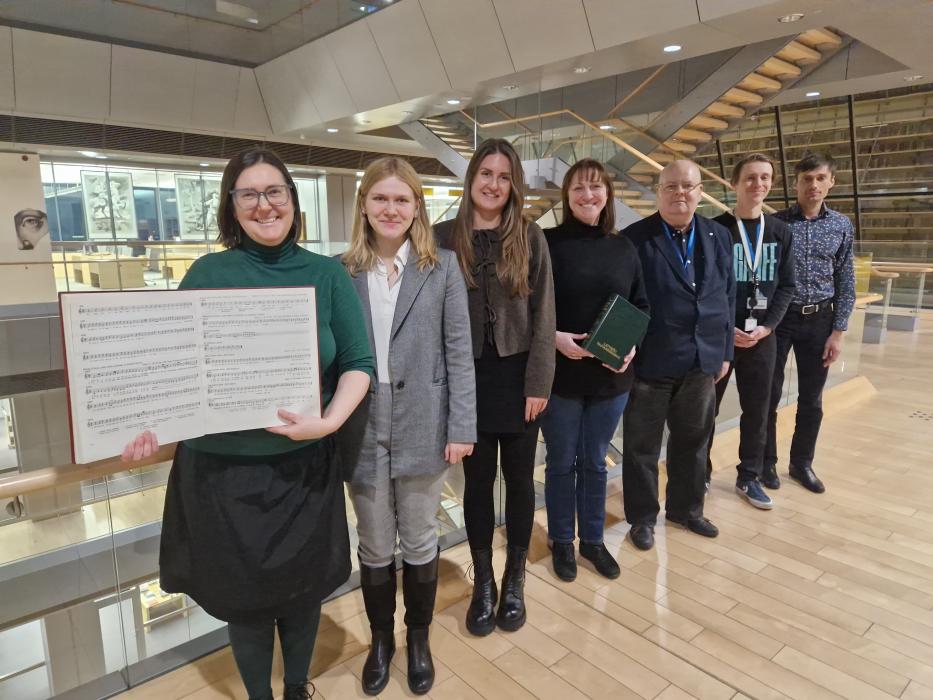
The Institute of Literature, Folklore and Art (ILFA) of the University of Latvia (UL) is launching a collaboration with the UL’s computer scientist Kārlis Freivalds and computer science doctoral student Linda Barbare on a research project “Spoken Songs: Algorithms of Composition and Improvisation”.
The project will merge expertise in musicology, folklore and computer science to address questions on how folk songs were sung, varied and improvised in the past. The study will review the previous paradigm and terminology of folk song theory, which has developed by long separation of folk song melodies and texts in the academic tradition. The methodological innovation will be exploring the applicability of artificial intelligence tools in melody and text processing, corpus creation, and interactive algorithmic analysis. This will allow new methods of music and folklore analysis to be tested on the basis of Latvian musical heritage.
The tasks for the first year of the project are to create corpora of song melodies and texts using optical character recognition (OCR) and optical music recognition (OMR) technologies and automated syllabification and meter detection of folk song texts. The resources created and research results will be published on the project website, in scientific repositories, and in several research articles.
* Project working group (pictured from left): project leader, musicologist Ieva Weaver, computer science doctoral student Linda Barbare, doctoral student in folkloristics Arta Krūze, folklorist Ginta Pērle-Sīle, musicologist Martin Boiko, doctoral candidate in musicology Dāvis Eņģelis, and computer scientist Kārlis Freivalds.
The research is supported by the Latvian Council of Science. Project No. lzp-2025/1-0252.