Call for papers – conference "‘Primitive and Noisy Music’ in Late Socialist period"
‘Primitive and Noisy Music’ in Late Socialist period: producing and controlling popular music in the Soviet Union and beyond
Rīga, 2 – 3 May 2026 (conference)
The conference is organised by the Institute of Literature, Folklore and Art, University of Latvia (ILFA) alongside the project “‘Primitive and Noisy Music’ in Soviet Latvia (1956-1986): Control Mechanisms and Practices of Avoidance Under Authoritarian Rule” (lzp-2024/1-0059), which is supported by the Latvian Research Council and carried out at ILFA.
Date: May 2 – 3, 2026
Venue: Aleponija, Birznieka-Upīša 22, Rīga, Latvia
Conference organisers: Jānis Daugavietis, Kaspars Zellis, Maarja Merivoo-Parro, Brigitta Davidjants
Email: RigaMuzika@gmail.com
Call for Papers
The multidisciplinary conference focuses on the functioning of popular music in the USSR during its last three decades. We are curious about what were the institutional formations and the transformation processes, as well as practices of production and consumption of popular music after the arrival of Western rock and roll, which coincided with the beginning of late socialism.
In recent decades, several important analyses of late socialist culture, art and everyday life have emerged, but almost none of them focuses on popular music. Soviet popular music has been studied sporadically and most often by selecting specific cases and analysing them descriptively. Thus, it is clear that there is a lack of temporally and spatially comparative research.
In the historiography of late socialism, institutions were explored only in isolated cases. In general, state institutions and their interaction with specific population groups, such as unofficial and/or underground music scenes on the spot, as well as refugee-exile-émigré musicians in the West, is still an under-studied field.
There are distinct periods in the history of dealing with or taming the ‘primitive and noisy’ music of young people, and the challenge might have resulted in a variety of tactics in different Soviet states. Contemporary public discourse is still dominated by the view that rock music was one of the forces that consciously and constantly contributed to the collapse of the USSR. This idea is still widely represented in Western research. At the same time, there is another interpretation of the daily cultural and professional art practices of Soviet citizens and artists, which does not see a deliberate protest against the authoritarian regime, but rather a politically distant coexistence or ‘being vnye’ or even a rational symbiosis.
The primary goal of the conference is to strengthen the community of researchers of late socialist popular music, focusing on the Baltic region, but not limited to it. The import/export of popular music with the Warsaw Pact (and also Yugoslavia) countries played a significant role, as did the internal migration of music and musicians between the different areas of the USSR.
We invite and welcome applications from a variety of disciplines, or combinations thereof: sociology, history, cultural studies, musicology, and digital humanities, to name a few. We also do not limit ourselves to researchers employed in academic institutions, but also invite citizen scientists to participate.
The conference will also serve as a platform for discussing the possibility of establishing a Baltic branch or chapter of IASPM.
We encourage submissions on (but not limited to) the following topics:
– cultural policy towards popular music
– supervising and controlling systems
– birth and development of discoteques
– import of Socialist and Western popular music
– migration of musicians, cross-border touring
– cases of banning (artists, songs, concerts, festivals)
– exile/ refugee/émigré music
– producing at ‘Melodiya’
– DIY culture and materiality in making musical instruments and equipment
– fandom and consumption
– the work of the KGB (and other surveillance and punitive organisations)
– discourse changes of official socialist mass media
– music samizdat and magnitizdat
– underground music and subcultures
– life cycles of amateur and professional VIAs
– black market for music recordings
– popular music in regions and in the countryside
– periodisation of the history of popular music, according to changes ininstitutions and practices
– song lyrics of socialist popular music
Submissions: via the online webform (https://forms.gle/uYThndvmTMQ2smxU8)
Please include the following: name and surname, paper title, an abstract of 2000 characters (including spaces), up to 5 keywords, and a one-paragraph short introduction about authors, including affiliation and main research topics.
The time allotment for presentations at the conference will be 15-20 min, followed by discussion.
The language of the conference is English.
DEADLINE: extended to March 15.
Feedback and evaluation will be given beginning from mid-March, 2026.
Conference fee: 20 EUR (10 EUR for students) – covers coffee breaks and snacks during the conference. Lunch and dinner are not included.
Entrance fee for non-presenting visitors: 2 EUR per day (free for students).
Accommodation: not included. Rooms need to be arranged and paid by the participants themselves. We will provide basic information and support about options in the area. s
Facebook event: https://fb.me/e/1UjhK4jCOK
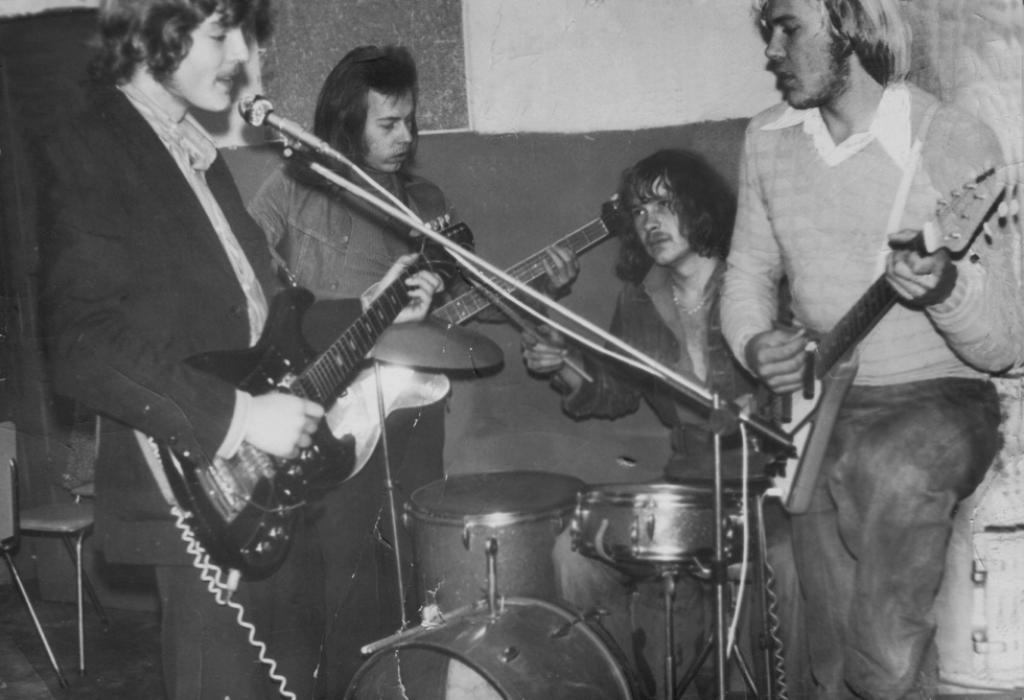
Photo: Kuldīga town culture house group, summer 1978. From the archive of Normunds Matrozis